Battle of the Beasts and the Wights
When the Cold Breathes A Ragnar Stormbringer Tale A Ragnar Stormbringer TaleThe Battle of the Beasts and the Wights is the climactic confrontation beneath Jarl Thryggvi's Hill-Fort: Belshezan’s summoned predators encircle the besieging dead and overwhelm them in a fight that lifts the siege. Seen from Ragnar Stormbringer’s position above the fortress, the battle begins as an apparent attack on the human stronghold but becomes a defense of the forest itself, as rival predators set aside their ordinary enmities to destroy the wights.
Causes and Background
The battle follows the wights’ assault on Jarl Thryggvi's Hill-Fort. The undead have come from the direction of the barrows, and Ragnar reasons that the cavern beneath them may have emptied when the wights were released. Their numbers around the stronghold are greater than he first estimated, making his expedition to find the sorcerer Belshezan all the more urgent. The fortress remains in good order, with sentries on its wall-walk and fires burning among the huts and roofed storage pits, but the human defenders are badly outnumbered.
The attack has already revealed why the stronghold’s defenses matter. The wights swarm across the ditch and climb the steep rampart with their claws, then scratch at the palisade and try to get over. Villagers hack and stab at any head or clawed hand that breaches the wooden barrier. Their crowding at the top of the slope obstructs those still climbing and prevents the undead from bringing their numerical superiority fully to bear. Ragnar fights at the palisade, knocking attackers back down the rampart with Raven Caller. This defense checks the assault, but it does not remove the threat gathered outside.
Belshezan’s Summons
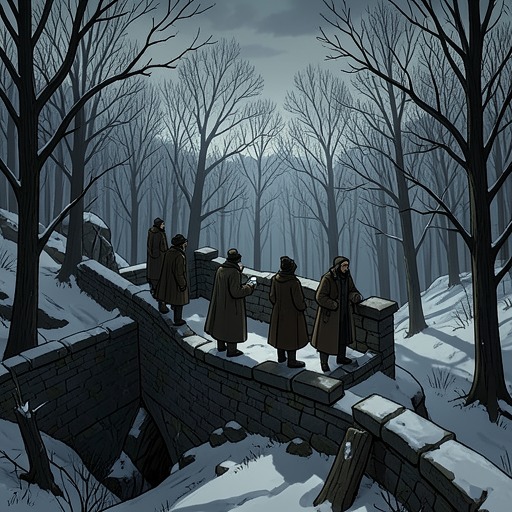
By the time Ragnar returns with Belshezan, night has fallen and the wights’ cries have carried on the wind for some while. The pair approach through the hills below the fortress. From a rise to its north, Ragnar sees shadowy wight forms among the surrounding trees and realizes that the horde is larger than he had believed. The stronghold is still guarded, but the view makes clear that its defenders cannot settle the siege alone.
Belshezan moves downhill, then turns and stamps his forepaws hard against the ground. Ragnar understands the warning and, choosing to trust him, steps back and returns Raven Caller to its loop. Halfway down the slope, Belshezan rears up and gives a sustained roar. Its sound rolls across the hills and draws an immediate response: movement inside the fortress as sentries turn toward the north, and a mass of wights striding through the trees toward the bear. Ragnar readies himself to intervene, unable to see how Belshezan could face such numbers unaided.
The bear’s roar proves to be a summons, not a challenge he intends to meet alone. A second chorus rises around Ragnar, made up of animal howls and roars rather than the wights’ unearthly cries. Wolves, bears, and Snow tigers race in from different directions; wolverines join them, and at least two Mayaks appear among the gathering predators. Several large, dark animals bound through the snow, while pale, elongated forms on massive paws outpace the others and reach the front. Ragnar recognizes the astonishing assembly as a combined force, not a lone bear charging into the undead.
The Battle at the Rampart
The forest animals hurry into position, surrounding the wights and trapping them against the ditch and rampart. The advancing horde halts just before the two sides collide. The predators’ arrival changes the shape of the fight: the wights that had threatened the fortress are now caught between the barrier and attackers converging from the surrounding ground.
The ensuing battle is savage and close. Wolves work together to bring wights down, then tear into them in groups. Bears use their enormous claws and jaws to maul the undead, battering heads from bodies, ripping off limbs, and decapitating attackers. Mayaks, Snow tigers, wolverines, and Sabre-toothed cats leap into the melee, clawing and biting wherever Ragnar looks. The wights fight back with their own claws and bites. Some predators are eviscerated, mutilated, or killed with their throats ripped open; victory is not immediate or without cost.
The animals’ cooperation proves as important as their ferocity. When a wolf faces two wights, a Mayak slams into one while the wolf attacks the other; after leaving two headless wights behind, the pair bound away to find new opponents. Elsewhere, a Snow tiger breaks a bear out of an attack by three wights, and the two animals turn on their assailants together. Ragnar is struck by the way the predators rush to one another’s aid. The forest’s usual enmities appear to give way to a common purpose: ridding their lands of creatures that belong to the realm of death.
Outcome and Significance
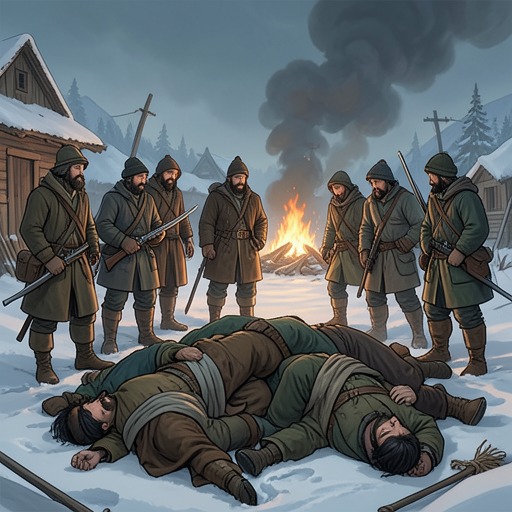
As the fighting continues, the advantage shifts decisively to the forest predators. The wights’ numbers dwindle under the sustained assault, while the animals repeatedly assist companions in danger. The undead do not retreat; they keep striking with teeth and claws until the last of their otherworldly cries falls silent. A deep hush settles over the fortress and surrounding woods, where the bodies of the fallen lie scattered.
Ragnar also understands why Belshezan had stopped him from following the bear downhill. In the confusion of battle, the predators treat anything on two legs among the trees as an enemy. By keeping Ragnar back, Belshezan protects him from being caught between the animals and the wights. The warning marks the difference between summoning allies and safely controlling a battlefield: even a force fighting on the humans’ behalf presents a danger to a human caught in its path.
After the battle, the surviving predators gather beyond the fortress gates. Belshezan passes through the multitude, which parts to let him through, and leads the assembled animals east. Wolves walk alongside bears; wolverines and Mayaks go side by side; Sabre-toothed cats and Snow tigers travel shoulder to shoulder. Ragnar watches from the hill until the last of the procession disappears. The siege has been broken, but the ending is not a human victory parade: the forest’s inhabitants leave together under Belshezan’s lead, having fought to reclaim their lands from the dead.